 11
11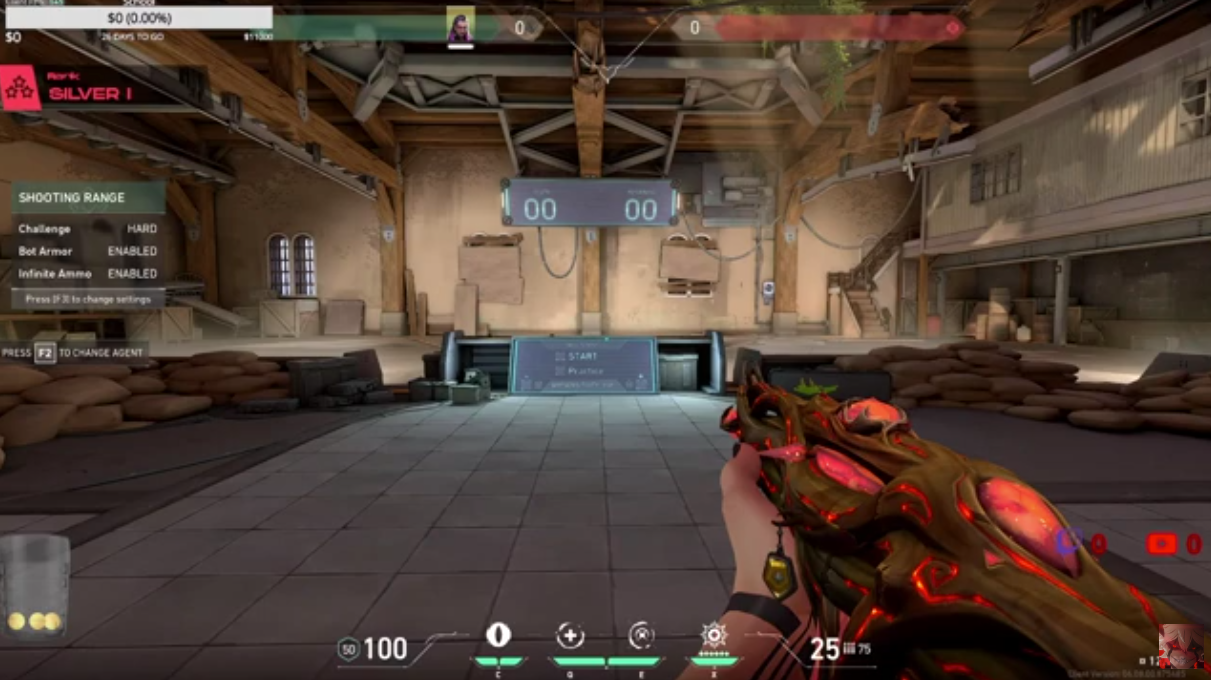
Climbing the ranked ladder in Valorant is a challenging but rewarding journey that tests your mechanical skill, game sense, and mental fortitude. Whether you’re stuck in Iron or pushing for Radiant, understanding the systems and strategies behind rank progression can dramatically accelerate your climb. While some players look for shortcuts like valorant accounts for sale to skip lower ranks, the most satisfying path is mastering the game yourself and earning your rank through genuine improvement. This comprehensive guide will break down everything you need to know to rank up faster and more consistently in Valorant’s competitive mode.
Before diving into improvement strategies, it’s crucial to understand how Valorant’s ranked system actually works. Valorant uses a hidden MMR (Match Making Rating) system alongside your visible rank. Your MMR determines who you’re matched against and how much RR (Rank Rating) you gain or lose per match. The system is designed to place you at your true skill level, but you can manipulate the speed of your climb by consistently performing well.
Your performance in each match affects your RR gains and losses. Winning matches while performing well individually will net you more RR, while losing matches where you bottom-fragged will cost you more. The system looks at metrics like combat score, which factors in damage dealt, kills, assists, and first bloods. This means even in losses, strong individual performance can minimize your RR loss.
One of the biggest mistakes players make when trying to rank up is constantly switching agents. While agent diversity seems appealing, it actually hinders your progression. Focus on mastering two to three agents maximum, ideally from different roles so you can flex based on team composition.
Choose agents that fit your playstyle and have high carry potential. Duelists like Jett, Reyna, and Raze are excellent for players with strong mechanical skills who can take aggressive duels. Controllers like Omen and Astra are invaluable for players with good game sense and tactical awareness. Sentinels like Killjoy and Cypher are perfect for players who excel at information gathering and site defense. Initiators like Sova and Fade are great for players who understand timing and teamplay.
By limiting your agent pool, you’ll develop deep muscle memory for their abilities, learn optimal utility usage, and make faster decisions in high-pressure situations. This mastery translates directly into better performance and more consistent wins.
Raw mechanical skill is fundamental in Valorant, and dedicating time to aim training before competitive sessions will dramatically improve your performance. Spend at least 15-30 minutes warming up before jumping into ranked matches. Use the in-game Range or third-party aim trainers like Aim Labs or Kovaak’s.
Focus on different aspects of aim during your warm-up. Practice flicking to targets to improve your reflexes, track moving bots to develop smooth mouse control, and practice counter-strafing to ensure accurate first shots. Don’t neglect spray control either; knowing how to control your weapon’s recoil pattern is essential for mid to long-range engagements.
Crosshair placement is arguably more important than raw aim. Always keep your crosshair at head level and pre-aim common angles where enemies are likely to appear. This simple habit reduces the distance your mouse needs to travel and increases your chances of securing instant headshots. Watch your own gameplay or pro players and notice where they position their crosshair when moving around the map.
Map knowledge is a massive advantage that separates lower-ranked players from higher-ranked ones. You need to know every angle, common hiding spot, rotation path, and sound cue on every map. This knowledge allows you to anticipate enemy positions, make faster decisions, and execute strategies more effectively.
For each map, learn the callouts so you can communicate clearly with teammates. Study common attacking strategies and default setups for each site. Understand where defenders typically position themselves and the timings for rotations. Know which walls are bangable, where utility is most effective, and what angles you need to clear when entering sites.
Practice these maps in custom games or unrated matches before taking them into competitive. Walk through sites slowly and memorize pixel angles and off-angles that can catch enemies by surprise. The more comfortable you are with the maps, the more confident your gameplay will become.
Understanding Valorant’s economy system and making smart purchase decisions can be the difference between winning and losing rounds. Never force-buy when your team is saving unless everyone agrees on a coordinated force. Respect the economy and ensure your team has enough credits for full buys on crucial rounds.
Learn which rounds are critical to invest in and which ones are acceptable to save. Typically, round two after winning pistol is a full-buy for the winning team and a save for the losers. After losing pistol, most teams save round two and force or full-buy round three depending on their economy. Understanding these patterns helps you predict enemy purchases and adjust your strategy accordingly.
Communicate with your team about buying decisions. If you’re the only one who can’t afford a full loadout, ask for a drop from teammates who have extra credits. Conversely, if you’re winning and have excess credits, drop weapons for struggling teammates. A cohesive team with proper loadouts will always outperform individuals with better guns but poor coordination.
Solo carrying is possible in lower ranks, but as you climb higher, teamwork becomes increasingly important. Good communication can turn average players into formidable teams. Use your microphone to make clear, concise callouts about enemy positions, low-health targets, and utility usage.
Avoid cluttering comms with unnecessary chatter during rounds. Save conversations for pre-round planning and post-round analysis. When you die, give one clear callout about where you died and how many enemies you saw, then stay quiet so living teammates can focus on sound cues.
Play off your teammates’ utility and positioning. If your initiator flashes a site, be ready to capitalize by swinging aggressively while enemies are blinded. If your controller smokes a chokepoint, trust the smoke and don’t peek through it unnecessarily. Coordinate pushes rather than trickling onto sites one by one, which gives defenders easy isolated duels.
While highlight reels feature incredible clutches and ace plays, consistency is what actually ranks you up. Focus on maintaining a positive kill-death ratio and winning your individual duels more often than you lose them. Avoid making hero plays that have low success rates; instead, take high-percentage engagements where you have advantages.
Play for trades when entering sites. If you peek an angle and die, your teammate should immediately swing to trade the kill, making it a 4v4 instead of a 4v5. This disciplined approach to trading prevents attackers from bleeding players without getting anything in return and helps defenders minimize damage when sites are being taken.
Minimize deaths by playing smarter rather than slower. Always have an escape plan when taking aggressive positions. Use cover effectively and don’t over-peek angles where you’re exposed to multiple enemies. Remember that staying alive to deny defuses or provide information is often more valuable than forcing a low-percentage duel.
Recording and reviewing your matches is one of the fastest ways to improve. When watching your gameplay, look for recurring mistakes like poor crosshair placement, overcommitting to fights, predictable patterns, or missed utility opportunities. Be honest with yourself about what you could have done better.
Pay attention to rounds you lost and identify what went wrong. Did you lose because of poor execution, communication breakdown, or being outplayed mechanically? Each type of loss requires different solutions. If you’re losing aim duels, spend more time in aim training. If you’re losing rounds due to bad trades, work on your positioning and timing.
Don’t just focus on negative aspects. Also identify what you’re doing well and look for opportunities to leverage those strengths more often. If you consistently win certain types of duels or excel at specific roles, lean into those strengths while working on your weaknesses.
Your mental state dramatically impacts your performance. Tilted players make emotional decisions, take unnecessary risks, and communicate poorly with teammates. If you find yourself frustrated after a loss, take a break before queuing again. Playing on tilt is one of the fastest ways to tank your rank.
Accept that you’ll lose approximately 40-50% of your games regardless of skill level due to matchmaking variance and factors outside your control. Focus on your own performance and improvement rather than fixating on rank gains and losses. Think long-term; if you’re genuinely improving, your rank will eventually reflect that.
Avoid blaming teammates for losses. Even if they performed poorly, focusing on blame prevents you from identifying your own mistakes and opportunities for improvement. Every match contains moments where you could have made better decisions, and recognizing these is crucial for growth.
While skill is most important, having a proper gaming setup enhances your performance. Use a low mouse sensitivity (most pros use 200-400 DPI with 0.2-0.5 in-game sens) for better precision. Ensure your monitor is set to its maximum refresh rate and that you’re getting consistent frame rates above your monitor’s refresh rate.
Optimize your graphics settings for performance rather than visuals. Lower settings reduce input lag and increase frame rates, giving you smoother gameplay and faster reaction times. Disable motion blur and bloom effects that can obscure enemies.
Invest in a quality headset that provides clear directional audio. Valorant‘s sound design is crucial for gathering information, and hearing enemy footsteps clearly gives you significant advantages. Make sure your audio settings are configured correctly for your headset type.
Timing your ranked sessions can impact your success rate. Avoid playing during peak hours when more casual players queue, as team quality becomes more variable. Many competitive players find early morning or late afternoon sessions have higher quality matches with more serious teammates.
Limit your ranked sessions to times when you’re mentally fresh and alert. Playing tired or distracted leads to mistakes and poor decision-making. If you’re on a losing streak of two or three games, stop playing ranked for the day. Extended losing streaks often result from accumulated tilt and fatigue rather than sudden skill loss.
Play enough matches consistently to maintain and improve your skills. Playing only once or twice per week makes it harder to build consistency and muscle memory. Aim for at least a few ranked sessions per week, even if they’re just two or three games each.
Keep a record of your performance metrics over time to identify trends and areas needing improvement. Track your average combat score, kill-death ratio, first blood percentage, and win rate. Look for patterns in which maps you perform best on, which agents give you the most success, and which times of day you play your best.
Set realistic short-term goals rather than focusing solely on reaching a specific rank. Goals like “improve my headshot percentage by 5%” or “die less than 15 times per game” are measurable and achievable. Meeting these smaller goals naturally leads to rank progression over time.
Celebrate improvements and milestones along your journey. Reaching a new rank or achieving a personal best combat score are accomplishments worth acknowledging. Positive reinforcement keeps you motivated and engaged with the improvement process.
Ranking up in Valorant requires a combination of mechanical skill, game knowledge, communication, and mental fortitude. By mastering a small agent pool, dedicating time to aim training, learning maps thoroughly, managing economy wisely, and maintaining a positive mental state, you’ll climb the ranks more efficiently. Remember that improvement is a gradual process; focus on consistent performance over flashy plays, learn from every match, and stay patient with your progression. With dedication and the right approach, you’ll reach your desired rank and continue climbing toward the top of the competitive ladder.