 11
11
Long-term commercial construction projects operate on extended timelines with evolving site conditions, changing crew sizes, and multiple trades cycling in and out over months or even years. While major logistics such as scheduling, material procurement, and equipment coordination are carefully planned, sanitation is sometimes treated as a static requirement rather than a dynamic operational system.
In reality, portable sanitation plays a continuous role in jobsite efficiency. Poor planning can lead to inconsistent conditions, worker dissatisfaction, and avoidable disruptions. A well-structured sanitation strategy, on the other hand, supports productivity, maintains jobsite organization, and adapts as the project evolves.
For contractors managing long-term builds, sanitation is not a one-time setup. It is an ongoing logistical function that must be planned, monitored, and adjusted throughout the life of the project.
Short-term projects may be able to rely on a fixed number of units and a basic servicing schedule. Long-term commercial builds are far more complex. Crew sizes fluctuate, project phases shift, and jobsite layouts change over time.
For example, early phases such as site preparation may involve smaller crews, while later stages like structural work and interior buildouts can bring multiple trades on-site simultaneously. This variation directly affects sanitation demand.
A static plan that does not adjust to these changes can lead to overcrowded units or underutilized resources. Contractors need a flexible approach that evolves with the project.
Planning for change from the beginning helps prevent sanitation issues later.
Each phase of a commercial build brings different sanitation requirements. Understanding how these phases impact usage allows contractors to plan more effectively.
During early stages, units may be concentrated near site access points. As construction progresses, sanitation needs shift closer to active work zones. Interior phases may require repositioning units to maintain convenient access.
Rather than treating sanitation as a fixed element, contractors should align placement and quantity with the current phase of work.
This approach ensures that facilities remain accessible and relevant throughout the project.
Adjusting to phase changes helps maintain consistency.
Crew size is one of the most important factors influencing sanitation strategy. As more workers are added to the site, demand increases, and servicing needs change.
Contractors should regularly evaluate:
Scaling the number of units appropriately helps prevent overcrowding and ensures that facilities remain usable.
Underestimating demand can lead to congestion and inefficiencies, while overestimating can result in underutilized resources.
Balancing capacity with actual usage is key to maintaining efficiency.
Commercial construction sites often cover large areas, making placement a critical part of sanitation planning. Units should be positioned to minimize travel time for workers while maintaining accessibility for servicing.
Rather than concentrating all units in a single area, contractors should distribute them across the site based on activity zones.
For example, units may be placed near:
This distribution helps reduce congestion and ensures that workers can access facilities without leaving their work zones for extended periods.
Proper placement improves both productivity and convenience.
Sanitation planning must account for more than just worker access. Service crews need clear and consistent access to units in order to perform maintenance.
If units are placed in areas that become difficult to reach due to construction progress, servicing may be delayed or less efficient.
Contractors should ensure that:
Planning for service access from the start helps maintain consistent sanitation conditions.
Reliable servicing depends on accessibility.
Long-term projects require ongoing evaluation of servicing schedules. As usage changes, servicing frequency must be adjusted to maintain appropriate conditions.
For example, peak construction phases with high worker counts may require more frequent servicing, while quieter phases may allow for less frequent maintenance.
Contractors should monitor usage patterns and coordinate adjustments as needed.
Working with providers such as Rent Porta Johns allows contractors to modify servicing schedules based on real-time conditions.
Flexible servicing ensures that sanitation keeps pace with project demands.
Sanitation conditions have a direct impact on worker experience. Clean, accessible facilities contribute to a more positive work environment, while poorly maintained units can create frustration and reduce productivity.
Workers are more likely to stay focused and efficient when basic needs are met consistently.
Maintaining reliable sanitation helps:
A well-managed sanitation system contributes to smoother daily operations.
Worker comfort is closely tied to productivity.
Portable sanitation should be considered alongside other logistical elements such as material deliveries, equipment movement, and waste removal.
For example, unit placement should not interfere with delivery routes or staging areas. At the same time, it should remain convenient for workers.
Coordinating sanitation with broader site logistics helps prevent conflicts and ensures that all elements of the jobsite work together efficiently.
Integration improves overall organization and reduces the likelihood of disruptions.
As commercial builds progress, site layouts change. New structures are added, access routes shift, and work zones move.
Sanitation strategy must adapt to these changes.
This may involve relocating units, adjusting quantities, or reconfiguring placement to match new site conditions.
Regular evaluation helps contractors stay ahead of these changes and maintain consistent sanitation access.
Flexibility is essential for long-term projects.
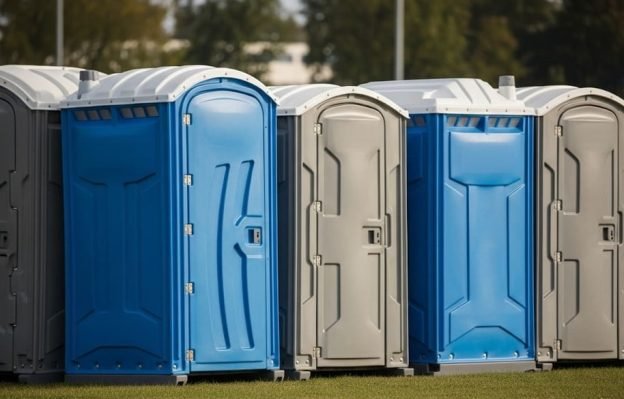
Several common mistakes can disrupt sanitation on long-term builds. These include failing to adjust unit quantity as crew sizes change, placing units without considering service access, and not updating placement as the site evolves.
Another common issue is treating sanitation as a one-time setup rather than an ongoing process.
Avoiding these mistakes requires continuous attention and proactive planning.
Contractors who treat sanitation as a dynamic system are better equipped to maintain consistent conditions.
A well-planned sanitation strategy supports overall jobsite efficiency. When facilities are accessible, properly maintained, and aligned with project needs, workers can focus on their tasks without unnecessary interruptions.
Proactive planning reduces the risk of sanitation-related issues and helps maintain steady progress.
Contractors who integrate sanitation into their broader project strategy benefit from smoother operations and fewer disruptions.
Efficiency improves when every aspect of the site is coordinated.
Portable sanitation is a critical component of long-term commercial construction projects. While it may not be as visible as other elements of site logistics, it plays a continuous role in supporting productivity, safety, and worker satisfaction.
For contractors, developing a flexible sanitation strategy that evolves with the project ensures that facilities remain effective throughout every phase. By scaling units based on crew size, adjusting servicing schedules, and coordinating placement with site logistics, construction teams can maintain consistent conditions over extended timelines.
When managed proactively, portable sanitation becomes an integral part of jobsite efficiency, helping long-term projects stay organized, productive, and on track from start to finish.