


Pamela Anderson is a name that instantly invokes images of iconic beauty, sultry charm, and her groundbreaking role as the famous lifeguard in the hit television show Baywatch. But beneath this glamorous exterior lies a woman whose journey is one of self-discovery, resilience, and transformation. Throughout her life and career, Pamela Anderson has balanced her public persona with the trials and tribulations of her personal life. Her journey, both on and off-screen, reveals a story of empowerment, struggles, and growth.
Pamela Anderson Quick Bio
| Full Name | Pamela Denise Anderson |
|---|---|
| Born | July 1, 1967, Ladysmith, British Columbia, Canada |
| Occupation | Actress, Model, Activist |
| Famous For | Baywatch, Playboy |
| Height | 5’7″ (170 cm) |
| Nationality | Canadian-American |
| Spouse(s) | Tommy Lee (1995–1998), Kid Rock (2006–2007), Rick Salomon (2007, 2014–2015) |
| Breakthrough Role | CJ Parker in Baywatch |
|---|---|
| Activism | Animal rights (PETA), Environmentalism |
| Notable Work | Baywatch, V.I.P., Playboy |
| Books | Pamela: A Love Story (Memoir, 2023) |
| Charitable Work | PETA campaigns, veganism, environmental advocacy |
| Other Ventures | Acting, Modeling, Writing |
The Emergence of an Icon
Pamela Denise Anderson was born on July 1, 1967, in Ladysmith, British Columbia, Canada. Growing up, she was a shy, introverted child, often struggling to fit in. However, her physical appearance, with her striking blonde hair and blue eyes, did not go unnoticed, and she soon found herself in the limelight.
Her rise to fame began in the early 1990s when she appeared on the cover of Playboy magazine. This was just the beginning of a career that would make her one of the most recognizable sex symbols in the world. Anderson was soon cast in Baywatch (1992–1997), a role that would define her for decades. As CJ Parker, the red swimsuit-wearing lifeguard, she became a household name, and Baywatch became one of the most-watched television shows globally.
While her Baywatch character was glamorous and seductive, the real Pamela Anderson was far more complex. The iconic persona she developed throughout her career was a carefully constructed image that masked the person beneath. In public, she embraced the playful, confident, and carefree nature of CJ Parker, but in her personal life, Anderson was battling struggles that would shape her into the woman she is today.
Pamela’s Early Life and Challenges
Despite her global fame, Pamela Anderson Alter early life was not without its difficulties. Growing up in Canada, she faced some tumultuous moments in her family life. Her parents, Barry and Carol Anderson, had a difficult marriage that eventually ended in divorce. Anderson’s own relationships with her family were often strained, and she has openly discussed how her parents’ tumultuous relationship affected her emotionally.
Her childhood was marked by insecurity, and Anderson has been vocal about her feelings of being an outsider. As a teenager, she struggled with body image issues, and the pressures of growing up in a small town added to her sense of isolation. In interviews, Anderson often speaks about her feelings of inadequacy, and her desire for love and acceptance. However, these experiences would eventually play a role in shaping her strong sense of self and drive to find her own place in the world.
At the age of 18, Anderson moved to Vancouver, where she began pursuing a career in modeling. Her early modeling gigs, including her appearance on the cover of Playboy, quickly propelled her into the spotlight. Despite the glamorous image, Anderson continued to grapple with the insecurities and emotional struggles of her youth. However, this was just the beginning of her larger journey.
The Duality of the Pamela Anderson Persona
Pamela Anderson’s career often seemed to be defined by her physical appearance. The public’s fascination with her looks and her Baywatch persona overshadowed the other aspects of her life, including her work as an activist and philanthropist. Anderson’s image, often associated with sex appeal and glamour, was a brand in itself, and it was something she had to navigate carefully throughout her career.
Despite the pressure to maintain this iconic image, Anderson began to evolve beyond the public perception. In the 2000s, she began using her fame to support causes that were deeply important to her. Anderson became a vocal advocate for animal rights and was heavily involved in campaigns for PETA (People for the Ethical Treatment of Animals). Her love for animals and her commitment to the cause led her to embrace a vegetarian lifestyle and later, a vegan one. She made it a point to use her platform to spread awareness about animal cruelty, and she became known for her unwavering stance on environmental issues.
Yet, despite her growing activism and public involvement in important causes, Anderson was still often seen through the lens of her Baywatch persona. This duality became a defining feature of her public image a woman who was both an outspoken advocate and a sex symbol, fighting to be seen for her full complexity.
A Life of Public Scandal and Personal Struggles
Behind the celebrity facade, Pamela Anderson’s personal life was riddled with complications. Her relationships, especially with high-profile figures, often made headlines. One of the most talked-about aspects of her life was her tumultuous marriage to Mötley Crüe drummer Tommy Lee. The couple’s highly publicized marriage, which began in 1995, was fraught with controversy, including a notorious sex tape that was leaked to the public without their consent.
The release of the tape was a turning point in Anderson’s life. Despite the public outrage and the media storm that followed, Anderson chose to move forward with her life, but not without consequences. She and Tommy Lee eventually separated in 1998, and Anderson’s reputation continued to be shaped by the media’s focus on her personal life.
Anderson’s struggles didn’t end with her marriage. Over the years, she faced a series of emotional and mental health challenges, including dealing with the loss of loved ones, divorces, and being the target of public ridicule. However, despite these personal challenges, Anderson never fully retreated from the public eye.
One of the most heart-wrenching moments in her life came in 2004 when she was diagnosed with Hepatitis C, a viral infection that she believed she contracted through sharing a tattoo needle with her ex-husband Tommy Lee. Anderson bravely used her platform to speak about her diagnosis, and she became an advocate for Hepatitis C awareness. Her candor about her struggles showed the world that she was more than just a glamorous figure; she was a woman who had endured pain and had fought for survival.
Reinvention and Empowerment: Pamela Anderson’s Journey of Transformation
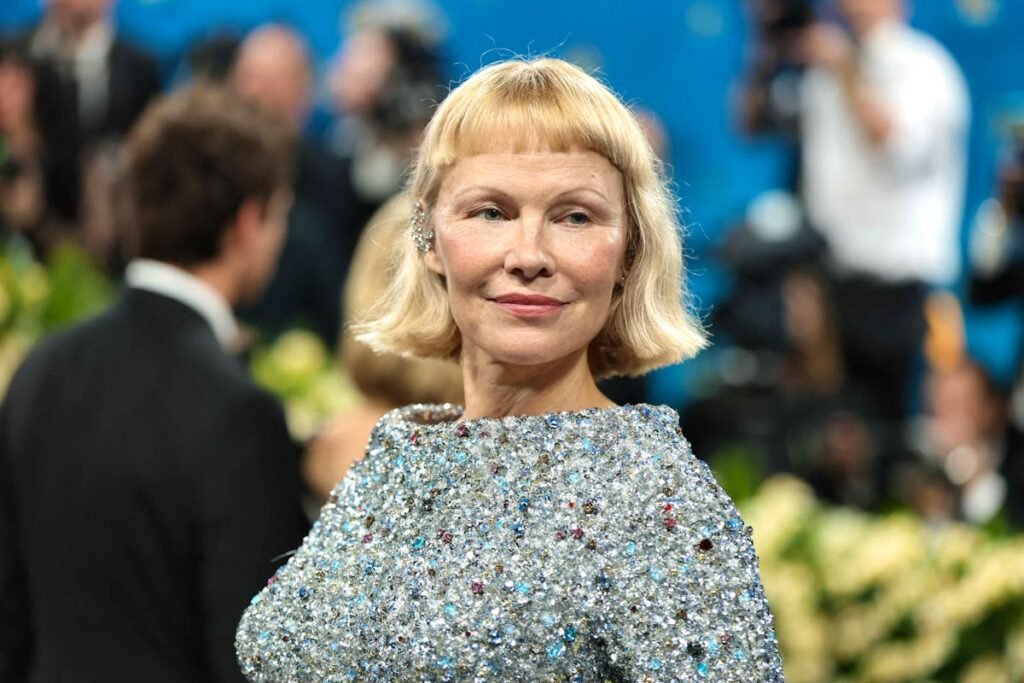
Pamela Anderson’s story is one of reinvention. After years of being defined by her Baywatch role, Anderson began to embrace her identity beyond her former persona. She used her fame to advocate for change, focusing on issues such as environmentalism, animal rights, and mental health.
In the later years of her career, Anderson became involved in a variety of television projects and even tried her hand at writing. Her memoir, Pamela: A Love Story, delves deeply into her emotional struggles, her relationships, and her journey to find self-acceptance. This book was a significant turning point in her career, as it allowed her to share her side of the story and showcase her true self.
Anderson’s resilience and ability to evolve have also been evident in her personal life. She has made multiple attempts at love, married and divorced several times, and is now focused on raising her two sons, Brandon and Dylan, with a sense of purpose and determination. In her later years, she has found a sense of peace, embracing a more private, quieter life. She has found solace in her personal relationships, her animal rights activism, and her connection with her children.
Pamela Anderson is a Canadian-American actress, model, and activist, best known for her iconic role as CJ Parker on the popular TV series Baywatch. She gained worldwide fame for her glamorous image and became one of the most recognizable sex symbols of the 1990s. However, her life is also marked by activism, resilience, and personal struggles.
Pamela Anderson portrayed CJ Parker, a lifeguard, on the hit television series Baywatch (1992–1997). Her character became a pop culture icon, and the show is still one of the most-watched TV series globally. Anderson’s role on Baywatch cemented her status as one of the most famous figures of the ’90s.
Pamela Anderson’s career began in modeling, where she gained attention after appearing on the cover of Playboy magazine at the age of 22. She quickly moved into television and film, securing her role on Baywatch shortly after. Her appearance in Playboy launched her into the spotlight, and she became one of the most sought-after models and actresses of her time.
Legacy of Pamela Anderson
Pamela Anderson’s legacy will always be intertwined with her iconic portrayal of CJ Parker in Baywatch. However, as she moves further away from her glamorous, sex-symbol image, Anderson has proven that she is much more than the persona created by the media. Her legacy is defined not only by her contributions to popular culture but also by her work as an advocate for animals and her determination to be seen as a multifaceted woman who overcame personal struggles.
Her story is one of empowerment a woman who reclaimed her narrative from the public’s perception and used her platform to bring about change. Pamela Anderson’s journey shows that even the most iconic personas can evolve and transform, and in doing so, create a new path for future generations to follow. Her resilience, activism, and embrace of her true self will continue to inspire those who look beyond the surface and seek to understand the complexities of the woman behind the icon.