
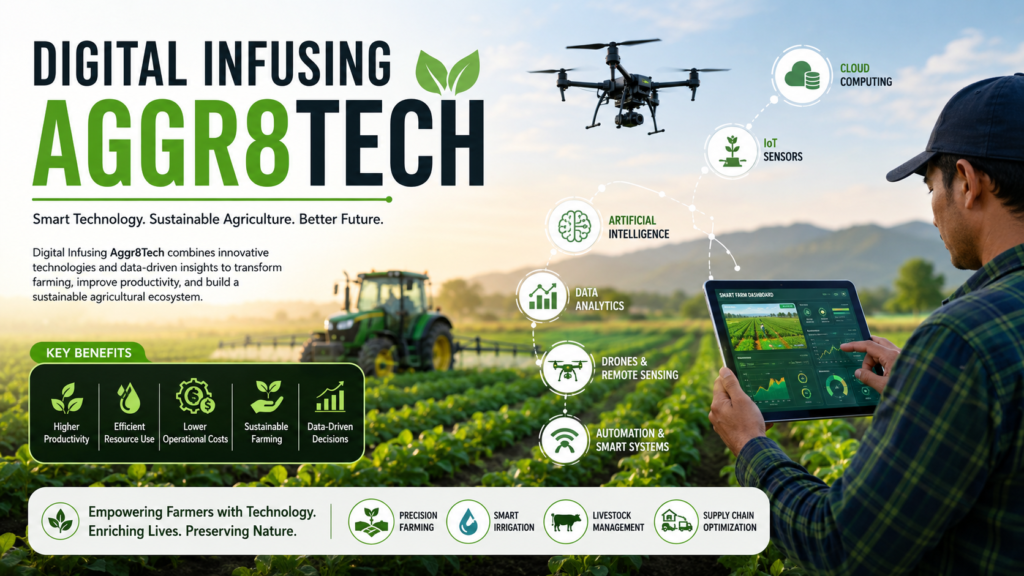

Digital Infusing Aggr8Tech Agriculture is experiencing a remarkable transformation driven by digital innovation, automation, and intelligent data systems. As global food demand continues to rise, farmers and agricultural businesses are seeking advanced solutions that improve productivity, reduce costs, and promote sustainable farming practices. One emerging concept leading this agricultural revolution is Digital Infusing Aggr8Tech.
Digital Infusing Aggr8Tech represents the integration of cutting-edge digital technologies into agricultural operations. By combining artificial intelligence, data analytics, smart sensors, cloud computing, and automation, Aggr8Tech helps farmers make informed decisions and optimize every aspect of crop production and farm management.
This innovative approach is reshaping traditional farming methods and enabling agriculture to become more efficient, sustainable, and profitable. In this comprehensive guide, we will explore the meaning of Digital Infusing Aggr8Tech, its benefits, key technologies, applications, challenges, and future potential.
What Is Digital Infusing Aggr8Tech?
Digital Infusing Aggr8Tech refers to the process of integrating advanced digital technologies into agricultural systems to enhance productivity, efficiency, and sustainability.
The term combines two powerful concepts:
- Digital Infusing – Incorporating digital tools and technologies into everyday agricultural processes.
- Aggr8Tech – Advanced agricultural technology solutions designed to improve farming operations.
Together, they create a smart farming ecosystem where data-driven insights help farmers monitor crops, manage resources, predict outcomes, and maximize yields.
Unlike conventional farming, which often relies on manual observation and experience, Digital Infusing Aggr8Tech uses real-time data and intelligent automation to improve decision-making.
Why Agriculture Needs Digital Transformation
The agricultural sector faces numerous challenges, including:
- Climate change
- Water scarcity
- Rising production costs
- Labor shortages
- Soil degradation
- Increasing global food demand
Traditional farming methods alone may not be sufficient to overcome these challenges. Digital technologies provide practical solutions by enabling farmers to:
- Monitor crops more accurately
- Reduce resource wastage
- Improve crop health
- Increase production efficiency
- Enhance sustainability
Digital Infusing Aggr8Tech offers a pathway toward modern agriculture that is both productive and environmentally responsible.
Core Technologies Behind Digital Infusing Aggr8Tech
Artificial Intelligence (AI)
Artificial intelligence plays a crucial role in modern agricultural innovation.
AI-powered systems can:
- Predict crop yields
- Detect plant diseases
- Analyze soil conditions
- Recommend irrigation schedules
- Forecast weather impacts
These capabilities help farmers make informed decisions that improve productivity and reduce risks.
Internet of Things (IoT)
IoT devices connect agricultural equipment, sensors, and monitoring systems to collect valuable data.
Examples include:
- Soil moisture sensors
- Temperature sensors
- Smart irrigation systems
- Livestock tracking devices
These devices continuously gather information and transmit it to centralized platforms for analysis.
Big Data Analytics
Agricultural operations generate enormous amounts of data daily.
Big Data analytics helps farmers understand:
- Crop performance trends
- Weather patterns
- Soil health indicators
- Resource utilization
With actionable insights, farmers can optimize operations and improve profitability.
Cloud Computing
Cloud technology enables secure storage and access to agricultural data from anywhere.
Benefits include:
- Real-time monitoring
- Remote farm management
- Data backup and security
- Collaborative decision-making
Farmers can access critical information using smartphones, tablets, or computers.
Drones and Remote Sensing
Agricultural drones have become valuable tools for modern farming.
They can:
- Monitor crop health
- Identify pest infestations
- Assess irrigation efficiency
- Create field maps
- Capture high-resolution images
Remote sensing technologies provide farmers with detailed field insights that are difficult to obtain through manual inspections.
Key Benefits of Digital Infusing Aggr8Tech
Improved Crop Productivity
One of the biggest advantages is increased agricultural output.
Farmers can identify problems early and apply corrective measures before significant crop damage occurs.
This leads to:
- Higher yields
- Better crop quality
- Reduced losses
Efficient Resource Management
Digital tools help optimize the use of:
- Water
- Fertilizers
- Pesticides
- Energy
Precision agriculture techniques ensure resources are applied only where needed, minimizing waste and reducing costs.
Enhanced Decision-Making
Data-driven insights eliminate much of the guesswork associated with farming.
Farmers can make smarter decisions based on:
- Real-time field conditions
- Historical data
- Predictive analytics
This improves both operational efficiency and profitability.
Sustainability and Environmental Protection
Modern agriculture must balance productivity with environmental responsibility.
Digital Infusing Aggr8Tech supports sustainability through:
- Reduced chemical usage
- Lower water consumption
- Improved soil conservation
- Reduced carbon emissions
These practices contribute to long-term agricultural resilience.
Reduced Labor Dependency
Labor shortages continue to challenge agricultural industries worldwide.
Automation technologies help reduce reliance on manual labor by:
- Automating irrigation
- Operating autonomous machinery
- Monitoring fields remotely
This improves efficiency while lowering labor costs.
Applications of Digital Infusing Aggr8Tech
Precision Farming
Precision farming uses technology to manage crops at a highly detailed level.
Farmers can:
- Apply fertilizers precisely
- Optimize irrigation
- Monitor soil conditions
- Increase productivity
Precision agriculture ensures that every section of a field receives the care it requires.
Smart Irrigation Systems
Water management is essential for successful farming.
Smart irrigation systems use sensors and weather data to determine when and how much water crops need.
Benefits include:
- Reduced water waste
- Lower utility costs
- Improved crop growth
Crop Monitoring
Advanced monitoring solutions allow farmers to track crop health continuously.
Technologies used include:
- Satellite imaging
- Drone surveillance
- AI-powered analytics
This enables early detection of diseases, nutrient deficiencies, and pest infestations.
Livestock Management
Digital technologies are not limited to crop production.
Livestock farmers use:
- Wearable sensors
- GPS tracking
- Health monitoring systems
These tools help improve animal welfare and farm productivity.
Supply Chain Optimization
Aggr8Tech solutions improve agricultural supply chains by enhancing:
- Inventory management
- Product traceability
- Logistics planning
- Market forecasting
This ensures products move efficiently from farms to consumers.
How Aggr8Tech Supports Sustainable Agriculture
Sustainability has become a central focus of modern agriculture.
Digital Infusing Aggr8Tech promotes sustainable practices through:
Water Conservation
Smart irrigation systems significantly reduce water waste by delivering precise amounts of water where needed.
Soil Health Monitoring
Continuous soil monitoring helps farmers maintain healthy growing conditions while avoiding excessive fertilizer use.
Reduced Chemical Dependency
AI-powered pest detection systems allow targeted treatment, reducing unnecessary pesticide applications.
Lower Carbon Footprint
Efficient resource management decreases fuel consumption and greenhouse gas emissions.
These environmental benefits contribute to a healthier agricultural ecosystem.
Challenges in Implementing Digital Infusing Aggr8Tech
While the benefits are substantial, implementation can present certain challenges.
Initial Investment Costs
Advanced agricultural technologies may require significant upfront investment.
Costs may include:
- Sensors
- Drones
- Software platforms
- Connectivity infrastructure
However, long-term savings often outweigh initial expenses.
Technology Adoption Barriers
Some farmers may face difficulties adapting to new technologies due to:
- Limited technical knowledge
- Training requirements
- Resistance to change
Education and support programs can help overcome these barriers.
Internet Connectivity Issues
Reliable internet access remains a challenge in some rural areas.
Cloud-based systems depend on stable connectivity for optimal performance.
Infrastructure improvements will be critical for widespread adoption.
Data Security Concerns
As farms become increasingly digital, protecting sensitive agricultural data becomes more important.
Strong cybersecurity measures help ensure information remains secure.
Future Trends in Digital Infusing Aggr8Tech
The future of agricultural technology looks incredibly promising.
Several trends are expected to drive further innovation:
AI-Powered Autonomous Farming
Self-driving tractors and autonomous farm equipment will become more common, improving efficiency and reducing labor requirements.
Advanced Robotics
Agricultural robots will assist with:
- Planting
- Harvesting
- Weed control
- Crop monitoring
Predictive Analytics
Future systems will provide even more accurate predictions regarding:
- Weather conditions
- Crop diseases
- Market demand
Blockchain Integration
Blockchain technology can improve transparency and traceability throughout agricultural supply chains.
Climate-Smart Agriculture
Digital solutions will help farmers adapt to changing climate conditions while maintaining productivity.
Why Digital Infusing Aggr8Tech Matters
Agriculture remains one of the world’s most important industries.
As populations grow and environmental challenges intensify, farmers need smarter tools to maintain food security.
Digital Infusing Aggr8Tech provides:
- Greater efficiency
- Improved sustainability
- Better decision-making
- Higher profitability
- Enhanced resource management
These benefits position it as a key driver of agricultural innovation in the coming decades.
Digital Infusing Aggr8Tech refers to integrating advanced digital technologies such as AI, IoT, data analytics, and automation into agricultural operations to improve productivity and sustainability.
It helps farmers increase yields, reduce costs, optimize resources, improve decision-making, and enhance farm efficiency
Key technologies include artificial intelligence, IoT sensors, cloud computing, drones, robotics, and big data analytics.
Conclusion
Digital Infusing Aggr8Tech is revolutionizing agriculture by combining advanced digital technologies with modern farming practices. Through artificial intelligence, IoT devices, cloud computing, big data analytics, drones, and automation, farmers can make informed decisions, optimize resources, and increase productivity.
The adoption of smart agricultural technologies is no longer a luxury but a necessity for meeting future food demands while protecting natural resources. Although challenges such as implementation costs and connectivity limitations remain, ongoing technological advancements continue to make digital agriculture more accessible.
As the agricultural industry evolves, Digital Infusing Aggr8Tech will play a vital role in creating a more sustainable, efficient, and resilient future for farmers and consumers worldwide.