

Droven IO Cybersecurity Updates is evolving at a pace never seen before. As businesses move deeper into cloud computing, artificial intelligence, remote work, and connected digital ecosystems, cybercriminals are becoming more advanced and organized. The latest updates surrounding Droven IO cybersecurity trends highlight a major shift toward AI-powered protection, Zero Trust security, identity defense, and real-time threat intelligence.
Organizations can no longer depend on traditional antivirus software or outdated firewall systems alone. Modern cybersecurity now requires intelligent automation, predictive analytics, behavioral monitoring, and continuous verification. Droven IO cybersecurity updates focus heavily on helping businesses and individuals understand these emerging threats while adapting to modern defense strategies.
Droven IO Cybersecurity Updates Quick Bio
| Information | Details |
|---|---|
| Platform Name | Droven IO |
| Category | Cybersecurity & Threat Intelligence |
| Focus Area | Security Updates and Digital Protection |
| Main Features | AI Threat Detection, Zero Trust, MFA |
| Security Coverage | Cloud, Endpoint, Identity, Network Security |
| Target Audience | Businesses, IT Teams, Cybersecurity Professionals |
| Information | Details |
|---|---|
| Key Benefit | Real-Time Threat Monitoring |
| Popular Topics | Ransomware, Phishing, Cloud Security |
| Technology Used | Artificial Intelligence & Automation |
| Security Approach | Proactive Threat Prevention |
| Industry Trend | Zero Trust Security Architecture |
| Purpose | Improve Cyber Awareness and Protection |
Understanding the Rise of Modern Cybersecurity
The digital landscape has changed dramatically over the last few years. Businesses now rely on cloud platforms, AI systems, SaaS applications, remote employees, and interconnected devices. While this digital transformation improves productivity and scalability, it also increases cyber risk exposure.
According to recent cybersecurity trend reports, attackers are using automation, machine learning, and AI-generated phishing campaigns to launch highly personalized attacks at scale.
Droven IO cybersecurity updates emphasize that security teams must move from reactive defense models to proactive and predictive security operations. Instead of waiting for an attack to occur, organizations should continuously monitor systems, analyze suspicious behavior, and stop threats before damage happens.
Latest Security Features Highlighted in Droven IO Cybersecurity Updates
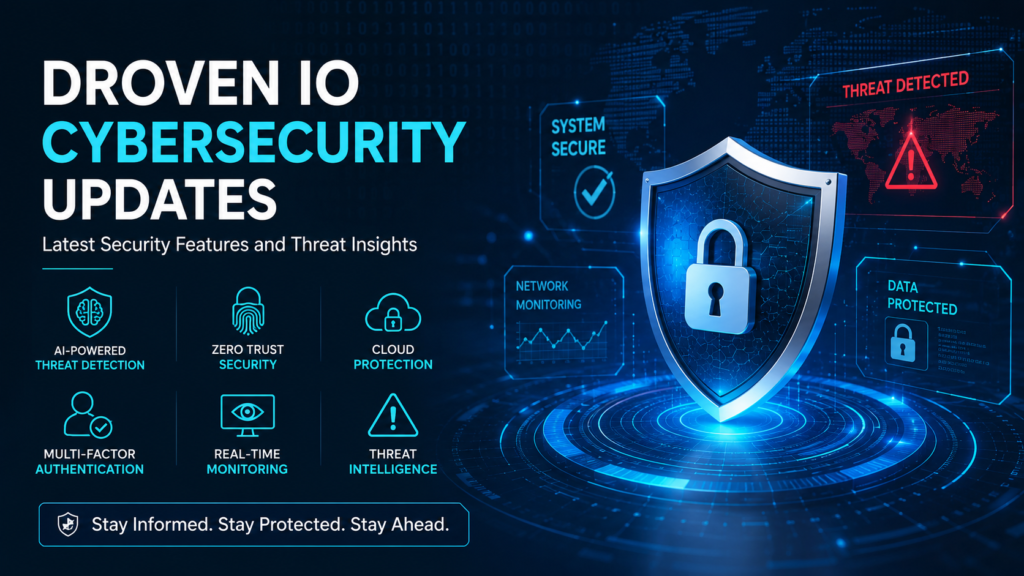
AI-Powered Threat Detection
One of the most important developments in modern cybersecurity is the use of artificial intelligence for threat detection.
Traditional systems rely on databases of known malware signatures. However, cybercriminals now create new attack methods faster than signature databases can update. AI-driven security tools solve this problem by analyzing behavior patterns rather than relying only on known threats.
These systems can identify:
- Unusual login behavior
- Suspicious file transfers
- Unauthorized data access
- Abnormal network traffic
- Insider threat activity
- Automated attack patterns
AI security tools continuously learn from data and improve detection accuracy over time. This allows organizations to identify zero-day threats and unknown vulnerabilities much faster than traditional systems.
Zero Trust Security Architecture
Another major topic in Droven IO cybersecurity updates is the adoption of Zero Trust frameworks.
Zero Trust follows a simple principle:
Never trust, always verify.
Instead of automatically trusting users inside a network, every access request must be authenticated and validated continuously.
Modern Zero Trust systems include:
- Multi-factor authentication (MFA)
- Identity verification
- Device validation
- Least-privilege access
- Continuous monitoring
- Session-based authorization
This approach significantly reduces the risk of credential theft and lateral movement inside corporate networks.
Multi-Factor Authentication Expansion
Passwords alone are no longer enough.
Droven IO cybersecurity updates strongly recommend stronger identity verification methods such as:
- Biometric authentication
- Security keys
- Mobile verification apps
- Hardware authentication tokens
- Passwordless login systems
MFA remains one of the simplest and most effective cybersecurity protections available today.
Real-Time Threat Intelligence Systems
Modern organizations now rely heavily on threat intelligence platforms that provide live updates on vulnerabilities, malware campaigns, phishing trends, and ransomware activity.
Threat intelligence helps businesses:
- Identify emerging threats
- Patch vulnerabilities quickly
- Monitor attacker behavior
- Predict attack patterns
- Improve incident response
Recent threat insight reports show increasing attacks against infrastructure systems, endpoint management platforms, cloud environments, and software supply chains.
Droven IO cybersecurity updates encourage companies to integrate automated threat feeds into their security operations centers for continuous monitoring.
Major Cybersecurity Threats in 2026
AI-Driven Cyber Attacks
Cybercriminals are now using artificial intelligence to automate attacks.
These AI-driven attacks can:
- Generate realistic phishing emails
- Clone human voices
- Create deepfake videos
- Automate reconnaissance
- Identify vulnerabilities faster
- Launch adaptive malware campaigns
Security experts warn that attackers no longer need to choose between sophistication and scale because AI allows both simultaneously.
This creates a much more dangerous threat environment for organizations worldwide.
Ransomware Evolution
Ransomware remains one of the biggest cybersecurity threats.
However, modern ransomware groups are changing tactics. Instead of only encrypting files, attackers now focus on operational disruption.
Modern ransomware attacks may:
- Disable cloud services
- Interrupt business operations
- Shut down payment systems
- Target backup infrastructure
- Leak stolen data publicly
Businesses now need both strong backups and detailed incident response plans to minimize damage.
Cloud Security Risks
As organizations migrate to cloud environments, cloud-related attacks are increasing rapidly.
Common cloud security issues include:
- Misconfigured storage buckets
- Weak API security
- Poor identity management
- Insecure third-party integrations
- Lack of visibility across cloud assets
Droven IO cybersecurity updates highlight that cloud security must include:
- Encryption
- Access control
- Continuous monitoring
- Identity governance
- Automated compliance checks
Identity-Based Attacks
Identity has become the new cybersecurity perimeter.
Attackers increasingly target:
- Employee credentials
- Authentication systems
- Single sign-on platforms
- Privileged accounts
This explains why passwordless authentication and identity threat detection are becoming major investment areas in cybersecurity.
Modern identity security systems can detect suspicious account activity and automatically block unauthorized access attempts.
Supply Chain and Third-Party Risks
Cybercriminals are increasingly targeting vendors, software providers, and third-party partners.
A single compromised supplier can expose thousands of organizations.
Supply chain attacks now focus on:
- Software updates
- Cloud service providers
- API integrations
- Managed service providers
- Open-source dependencies
Organizations must now evaluate vendor security as part of their overall cybersecurity strategy.
Importance of Cybersecurity Awareness Training
Human error remains one of the biggest causes of successful cyber attacks.
Even advanced security systems can fail if employees click malicious links or share credentials unknowingly.
Droven IO cybersecurity updates consistently emphasize cybersecurity education and awareness training.
Effective training programs should teach employees how to identify:
- Phishing emails
- Fake login pages
- Social engineering attacks
- Suspicious downloads
- Business email compromise scams
Cybersecurity awareness should become part of company culture rather than a one-time training session.
Best Practices for Stronger Cybersecurity
Organizations looking to improve security should focus on layered defense strategies.
Enable Multi-Factor Authentication
MFA dramatically reduces the success rate of account compromise attacks.
Keep Software Updated
Regular patching helps close known vulnerabilities before attackers exploit them.
Use Endpoint Detection and Response (EDR)
Modern endpoint security tools monitor device behavior continuously and isolate infected systems automatically.
Backup Critical Data
Organizations should maintain encrypted, offline, and regularly tested backups.
Adopt Zero Trust Principles
Continuous verification reduces unauthorized access risks significantly.
Monitor Threat Intelligence
Real-time intelligence helps businesses stay aware of emerging attack campaigns.
Conduct Regular Security Audits
Routine assessments help identify vulnerabilities before attackers do.
Future Trends in Cybersecurity
The future of cybersecurity will likely focus on:
- Autonomous AI defense systems
- Quantum-resistant encryption
- Behavioral analytics
- Passwordless authentication
- Advanced identity protection
- Automated incident response
- AI governance and ethics
- Cyber resilience frameworks
Experts predict that cybersecurity spending will continue rising as organizations prioritize resilience and operational continuity.
Why Droven IO Cybersecurity Updates Matter
Droven IO cybersecurity updates provide valuable insight into how security technology and threat landscapes are evolving. The information reflects broader industry trends involving AI-driven defense, identity protection, Zero Trust architecture, and proactive threat monitoring.
For businesses, staying informed is no longer optional. Cybersecurity now affects:
- Customer trust
- Regulatory compliance
- Financial stability
- Brand reputation
- Operational continuity
Organizations that fail to modernize their cybersecurity strategies may struggle against increasingly automated and intelligent threats.
Droven IO cybersecurity refers to the latest cybersecurity insights, updates, security trends, and threat intelligence information focused on helping businesses and individuals stay protected against modern cyber threats.
Cybersecurity updates help organizations stay informed about new threats, software vulnerabilities, ransomware attacks, phishing techniques, and emerging security technologies. Regular updates improve overall digital protection and reduce security risks.
Some major cybersecurity features highlighted include:
- AI-powered threat detection
- Zero Trust security architecture
- Multi-factor authentication (MFA)
- Real-time threat intelligence
- Endpoint detection and response (EDR)
- Cloud security monitoring
- Identity and access management
Final Thoughts
The cybersecurity landscape in 2026 is more complex than ever before. Attackers now use AI, automation, social engineering, and advanced ransomware strategies to target businesses and individuals worldwide. At the same time, modern defense technologies are becoming smarter, faster, and more adaptive.
Droven IO cybersecurity updates highlight the importance of proactive security strategies built around AI-powered detection, Zero Trust principles, identity protection, and real-time threat intelligence. Businesses that invest in layered security, employee education, and continuous monitoring will be far better prepared for the evolving digital threat environment.